

The Yom Kippur War: A Deep Dive into the 1973 Conflict

Updated: Dec 17, 2025
Understanding the Yom Kippur War
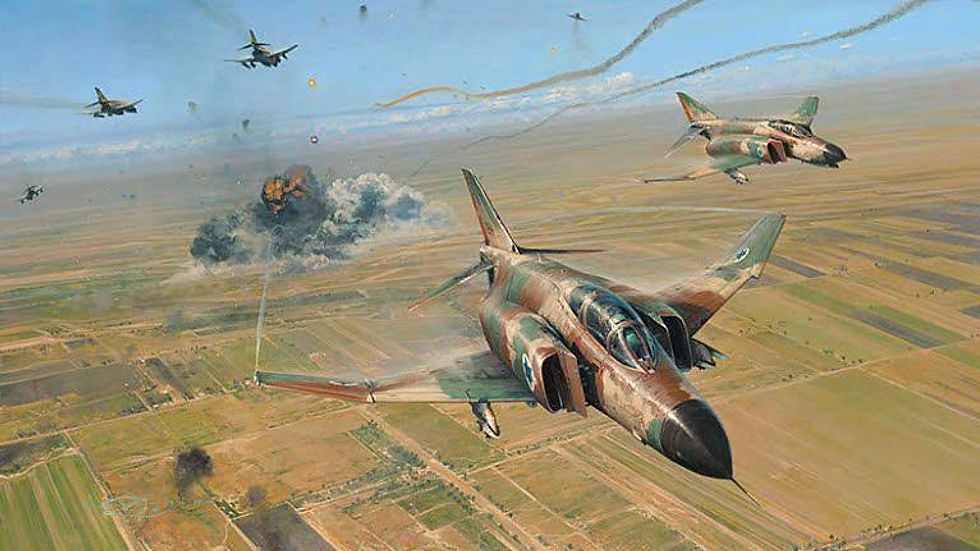
The Yom Kippur War of October 1973 was not only the fourth and most dangerous Arab-Israeli conflict but also one of the closest moments the world came to nuclear confrontation after the Cuban Missile Crisis of 1962. The war began on Yom Kippur, the holiest day in the Jewish calendar, known as the Day of Atonement. For the Jewish people, Yom Kippur is a solemn day of fasting, prayer, and reflection, during which individuals seek forgiveness and reconciliation for their sins. Because much of Israel’s population, including soldiers, observed the holiday, the Arab forces achieved a strategic surprise that initially overwhelmed Israeli defenses.
What began as an Arab attempt to regain territory lost in the Six-Day War of 1967 quickly escalated into a Cold War confrontation. The Soviet Union backed its Arab allies while the United States provided decisive support to Israel. The combination of battlefield desperation, superpower rivalry, and nuclear posturing transformed a regional war into a global flashpoint.
Background to the War

Egyptian President Anwar Sadat and Syrian President Hafez al-Assad launched the war on October 6, 1973. Egypt aimed to recover the Sinai Peninsula, while Syria sought to regain the Golan Heights. Sadat also intended to break the diplomatic stalemate with Israel and attract the attention of the superpowers, compelling a settlement favorable to Egypt. Unlike 1967, Sadat’s strategy was limited. He sought a foothold on the east bank of the Suez Canal to restore Egyptian prestige and leverage negotiations. Assad, more uncompromising, hoped to recover the Golan rapidly with Iraqi and Jordanian reinforcements.
Israel had underestimated the likelihood of an immediate attack. They adhered to the “concept” doctrine, which assumed Arab states would not risk war unless they possessed overwhelming superiority. The Arab assault exposed Israel’s blind spots. Intelligence warnings from Aman (military intelligence) and Ashraf Marwan, Sadat’s son-in-law and a high-level Mossad source, were either ignored or mistrusted. Prime Minister Golda Meir’s cabinet, cautious of appearing as the aggressor, rejected a preemptive strike just hours before the invasion. This hesitation nearly proved disastrous.
Major Engagements
The Sinai Front

In the Sinai, Egyptian forces executed a coordinated crossing of the Suez Canal using bridges and boats. The Egyptian 2nd and 3rd Armies advanced under cover of a dense network of Soviet-supplied SAM batteries—SA-2s, SA-3s, and SA-6s—that blunted Israeli airpower. Egyptian infantry armed with RPG-7s and AT-3 Saggers inflicted shocking losses on Israeli tanks, undermining IDF doctrine that had long prioritized armored maneuver.
Early Israeli counterattacks, including one on October 8, ended in disaster, with hundreds of tanks destroyed. However, by mid-October, Israel began to recover. At the “Chinese Farm,” Ariel Sharon’s 143rd Division and Avraham Adan’s 162nd Division engaged in brutal close-range battles that left thousands dead. Sharon then crossed the Suez at Deversoir, encircling the Egyptian Third Army and threatening Cairo. This encirclement was decisive but also risked drawing the Soviets into direct confrontation.
The Golan Front

On the Golan Heights, Syria launched a massive offensive with nearly 1,400 tanks against a thin Israeli defense of fewer than 200 tanks. In the “Valley of Tears,” Colonel Avigdor Ben-Gal’s 7th Armored Brigade fought tenaciously, sometimes with crews manning tanks alone against waves of Syrian armor. By October 10, Israeli counterattacks pushed Syrian forces back, even threatening Damascus. Only the arrival of Iraqi and Jordanian expeditionary forces prevented a complete collapse of the Syrian front.
Soviet and American Involvement
The Soviet Union mounted an emergency airlift of weapons to Egypt and Syria, readying airborne divisions for intervention. Meanwhile, the United States hesitated until reports suggested Israel might prepare nuclear options if defeat loomed. Nixon and Kissinger launched Operation Nickel Grass on October 14, delivering more than 22,000 tons of military supplies to Israel. This massive airlift restored Israel’s capacity for sustained counteroffensives.
The Nuclear Crisis

By October 24–25, Israel had surrounded the Egyptian Third Army. Fearing collapse, Sadat appealed to Moscow. Brezhnev warned Washington that the Soviets might act unilaterally to enforce a ceasefire. In response, on October 25, the United States raised its global readiness to DEFCON 3, dispersing bombers, deploying nuclear submarines, and placing ICBMs on high alert. Simultaneously, Israel reportedly armed its Jericho missiles and prepared nuclear bombs for possible use. The confrontation represented the closest brush with nuclear escalation since Cuba in 1962. Only backchannel diplomacy by Kissinger and U.N. Resolution 338 prevented disaster.
Resolution and Aftermath
The ceasefire left Israel militarily advantaged but politically shaken. The Agranat Commission later exposed the failures of intelligence and command, prompting Prime Minister Golda Meir and Defense Minister Moshe Dayan to resign. Israeli casualties exceeded 2,600 dead and 7,200 wounded, while Egypt lost some 15,000 dead and Syria about 8,000, with additional losses from Iraqi and Jordanian contingents.
For the Arab world, the war restored a sense of dignity. Sadat’s symbolic victory in crossing the Suez allowed him to pursue diplomacy, culminating in his 1977 visit to Jerusalem and the Camp David Accords of 1978. Syria, by contrast, felt betrayed when Egypt later made peace with Israel, entrenching its hostility. The war also reshaped global politics. On October 17, OAPEC announced an oil embargo against U.S.-supporting states, quadrupling oil prices and sparking the 1973–74 energy crisis that shook Western economies. This demonstrated the global reach of Middle Eastern conflicts, linking battlefield outcomes to oil and global recession.
For Israel, the war shattered the aura of 1967 invincibility. For Washington and Moscow, it was a reminder of how quickly regional wars could escalate to nuclear brinkmanship. And for the Arab states, it proved that military pressure could not destroy Israel but could create the conditions for negotiation.
After Action Report – Operational Debrief
Subject: Yom Kippur War (6–25 October 1973)
1. Situation
Date of Initiation: 6 October 1973 (Yom Kippur).
Enemy Action: Coordinated surprise attack by Egypt and Syria.
- Egypt: Crossing of Suez Canal; objective: seize east bank, regain Sinai leverage.
- Syria: Multi-division assault on Golan Heights; objective: regain Golan territory.
Strategic Context:
- Regional attempt to reverse 1967 losses.
- Cold War dimension: USSR backing Arab states; U.S. backing Israel.
- Timing leveraged Israeli national observance of Yom Kippur.
2. Enemy Forces
Egypt:
- 2nd & 3rd Armies, armored brigades (T-55/T-62).
- Dense SAM coverage (SA-2, SA-3, SA-6).
- Infantry equipped with RPG-7 and AT-3 Sagger ATGMs.
Syria:
- 1st, 3rd, 7th Divisions (~1,400 tanks).
- Heavy artillery support.
- Reinforced mid-war by Iraqi armored divisions and Jordanian expeditionary units.
External: Soviet airlift resupply; airborne forces placed on alert; Mediterranean naval deployments increased.
3. Friendly Forces
IDF – Sinai Front:
- 162nd, 252nd, 143rd Armored Divisions.
- Key maneuver: Sharon’s 143rd Division canal crossing at Deversoir.
IDF – Golan Front:
- 7th & 188th Armored Brigades, Golani Infantry Brigade.
- Reserves rapidly mobilized and committed.
External Support:
- U.S. Operation Nickel Grass (airlift of >22,000 tons of equipment).
- Restored IDF operational capacity after initial losses.
4. Execution
Phase I – Surprise Attack (6–8 Oct):
Egypt crossed Suez; established multiple bridgeheads.
Syria penetrated Golan; outnumbered IDF defenders nearly overrun.
Israeli early counterattacks failed; severe armor losses.
Phase II – Stabilization (9–14 Oct):
Golan: IDF held in “Valley of Tears”; Syrians halted.
Sinai: IDF contained Egyptian expansion; heavy attrition on both sides.
Phase III – Breakthrough (15–22 Oct):
Battle of Chinese Farm: high Israeli casualties, but breach achieved.
Sharon/Adan canal crossing at Deversoir.
Encirclement of Egyptian 3rd Army.
IDF advanced within artillery range of Damascus and toward Cairo.
Phase IV – Escalation / Ceasefire (23–25 Oct):
Sadat appealed to USSR; Brezhnev threatened unilateral action.
The U.S. raised its alert to DEFCON 3; nuclear forces have been dispersed.
Israel reportedly armed nuclear-capable Jericho missiles.
Ceasefire imposed under U.N. Resolution 338.
5. Results
Military:
- Israel restored front lines; tactical encirclement of Egyptian 3rd Army.
- Syria pushed back beyond prewar lines; offensive momentum lost.
Political:
- Egypt claimed symbolic success (crossing Suez, initial gains).
- Israel suffered strategic shock; Agranat Commission inquiry led to resignations (PM Meir, DM Dayan).
- Arab oil embargo (OAPEC) quadrupled oil prices, triggered global economic crisis.
- U.S. influence in Egypt expanded; Soviet influence diminished.
6. Losses
Israel: ~2,656 KIA; ~7,200 WIA.
Egypt: ~15,000 KIA.
Syria: ~8,000 KIA.
Other Arab States (Iraq, Jordan, etc.): Several thousand combined.
Materiel: Hundreds of Israeli tanks and aircraft destroyed; Arab losses were heavier but offset by Soviet resupply.
7. Lessons Learned
Intelligence: Reliance on the “concept” doctrine led to strategic surprise. Signals (Marwan warning, Arab mobilization) were missed.
Technology/Doctrine: Arab use of SAM/ATGM systems neutralized traditional Israeli advantages (air/armor) in the war's opening phase.
Force Readiness: National/religious holidays increase vulnerability if adversary exploits timing.
Coalition Operations: Egyptian-Syrian coordination was initially effective; collapse followed when pressure was not sustained.
Superpower Risk: Regional wars can escalate rapidly; DEFCON 3 underscored nuclear danger.
Energy as Weapon: The Arab oil embargo demonstrated the economic leverage of regional conflict.
Political Fallout: Even with battlefield success, the perception of failure undermined Israeli leadership; conversely, Sadat’s limited aims enabled strategic diplomatic gains (Camp David trajectory).
8. Strategic Assessment
IDF: Recovered from near-collapse; demonstrated resilience but exposed doctrinal and intelligence weaknesses.
Egypt: Achieved the strategic goal of regaining credibility; parlayed battlefield gains into diplomatic leverage.
Syria: Suffered heavy losses; dependent on Soviet support; embittered by Egyptian diplomacy.
U.S./USSR: Cold War brinkmanship highlighted; U.S. influence strengthened.
Global: Energy security is linked to regional stability; the oil embargo reshaped the global economic balance.
Conclusion
The Yom Kippur War was a pivotal moment in military history. It reshaped the geopolitical landscape and highlighted the complexities of international relations during the Cold War. The lessons learned from this conflict continue to resonate today, underscoring the delicate balance between military power and diplomatic negotiation. Understanding these dynamics is crucial for anyone interested in military history and strategy.


Comments