

1st Cavalry Division Museum at Fort Hood

Updated: Sep 12, 2025
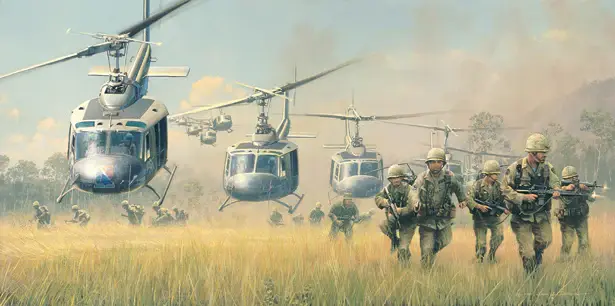


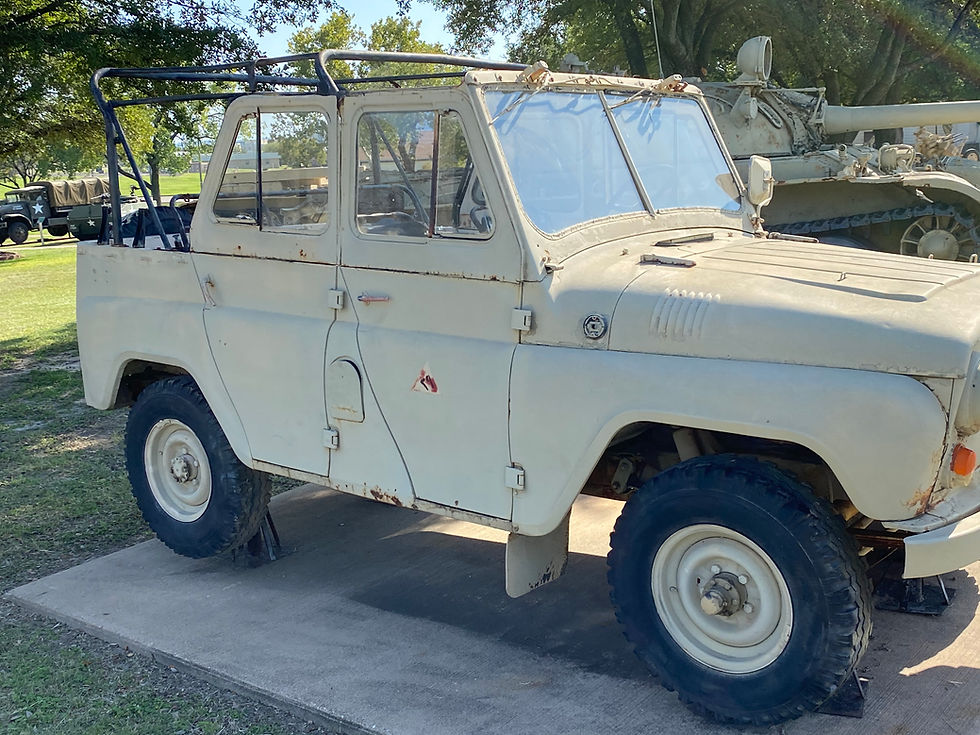
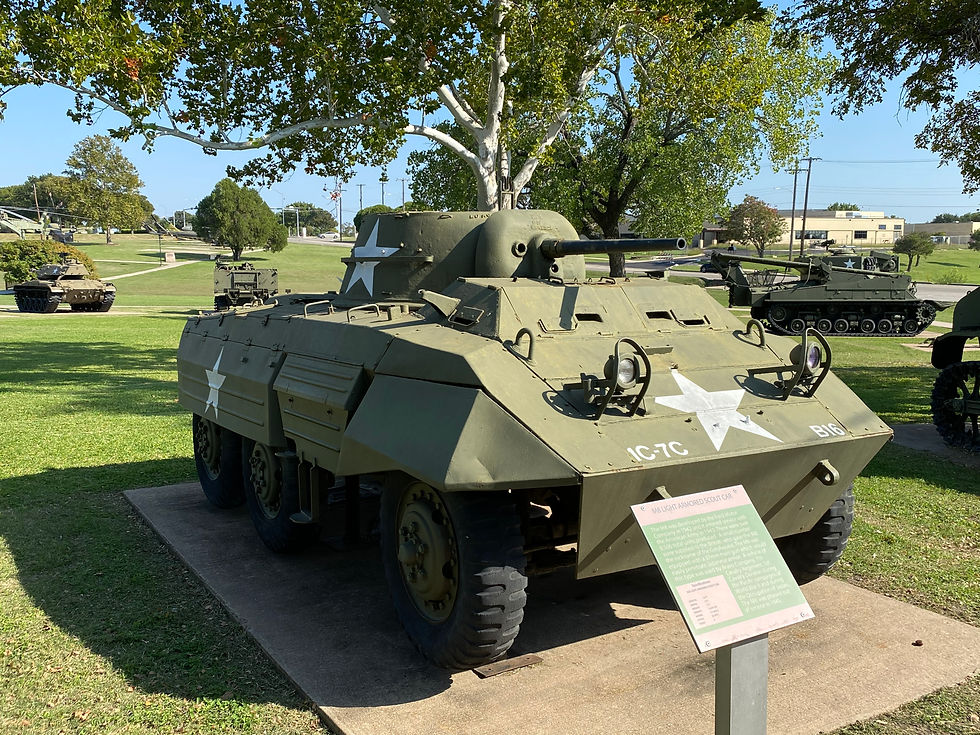
On October 6, 2020, we visited the 1st Cavalry Division Museum at what was then still known as Fort Hood in Killeen, Texas. The museum itself offers a powerful journey through history, honoring the storied legacy of the 1st Cavalry Division while preserving the broader traditions of the U.S. Army. We walked through detailed indoor exhibits that traced the division’s campaigns from its horse-mounted beginnings to its modern mechanized and air-mobile roles. Outside, rows of tanks, helicopters, and armored vehicles stood as tangible reminders of how the division adapted through decades of conflict and innovation.

The base itself has a layered and contentious history. Established in 1942 as Camp Hood, it grew into one of the Army’s largest installations. For decades, it bore the name Fort Hood, honoring Confederate General John Bell Hood. Hood is a highly controversial figure. During the Civil War, he commanded the Army of Tennessee in 1864 and 1865. Although personally brave, he was known for employing aggressive and reckless tactics that often resulted in devastating casualties among his own troops. His frontal assaults at the Battle of Franklin, for example, led to massive Confederate losses, effectively decimating his army. In addition to his battlefield decisions, Hood was a slave owner, inheriting enslaved people through his family and his marriage, and managing them on his household and plantation estates. Historical accounts suggest his treatment of enslaved individuals aligned with the harsh discipline and oppression inherent to slavery. These factors, combined with the catastrophic consequences of his military campaigns, make him a deeply problematic figure to honor with the name of a modern military installation.
In 2023, the base was officially renamed Fort Cavazos in honor of General Richard E. Cavazos, the first Hispanic four-star general in U.S. Army history. Cavazos distinguished himself in Korea and Vietnam, earning two Distinguished Service Crosses and rising to lead armored and infantry units with excellence, mentorship, and strategic innovation. Honoring him reflected valor, leadership, and the diverse contributions of modern American soldiers. However, in June 2025, President Donald Trump reversed the renaming, restoring the Fort Hood designation. Officially, the reversion was framed as a tribute to Colonel Horace R. Hood, a World War I officer who served with distinction as a regimental commander. Colonel Hood, though noted for his administrative and organizational skills, had a comparatively modest record compared with General Cavazos, and he was largely unknown outside military historical circles. Critics argued that the decision appeared politically motivated to appeal to certain Southern supporters and groups advocating for Confederate symbolism, undermining efforts to recognize leaders like Cavazos. The choice to revert to a Confederate-associated name and frame it around a relatively obscure World War I colonel illustrates the tension between historical legacy and contemporary military values.

The 1st Cavalry Division has one of the most remarkable lineages in the U.S. Army. Activated in 1921 as a horse-mounted unit, it gradually transitioned to mechanized warfare. During World War II, the division fought across the Pacific, including the liberation of the Philippines and the rescue at Santo Tomás Internment Camp in Manila. They employed M3 Stuart and M4 Sherman tanks, half-tracks, and light artillery to support infantry operations. Commanders like General John B. Coulter emphasized mechanization and combined arms integration, preparing the division for modern combat. By war’s end, the 1st Cavalry had participated in some of the most critical campaigns in the Pacific and was among the first American units to enter Tokyo in 1945.
In the Korean War, the division was rushed to the peninsula in July 1950 to help

hold the Pusan Perimeter, the last UN stronghold in the southeast corner of Korea. Soldiers held key terrain under relentless North Korean attacks, using M24 Chaffee light tanks initially, later reinforced with M26 Pershings and M46 Pattons to counter North Korean T-34/85s. Leaders such as General Richard E. Cavazos (then a company officer) and division commanders coordinated infantry, armor, and artillery to stabilize the line. The 1st Cavalry’s stand at Pusan bought crucial time for reinforcements, then participated in the breakout and pursuit northward, contributing to the liberation of Seoul.

During the Vietnam War, the 1st Cavalry Division became the Army’s first “airmobile” division, deploying hundreds of UH-1 Hueys, CH-47 Chinooks, and AH-1 Cobras for troop transport, heavy lift, and attack support. Its most famous engagement came at the Battle of Ia Drang (November 1965). Then-Lt. Col. Hal Moore, commanding the 1st Battalion, 7th Cavalry Regiment, led his battalion into Landing Zone X-Ray against overwhelming North Vietnamese forces. For three days, Moore’s troops, reinforced by other division elements and supported by artillery and helicopter gunships, held their ground. This battle demonstrated the power of air mobility and highlighted Moore’s leadership, later chronicled in We Were Soldiers Once… and Young. Other leaders, such as General William E. DePuy, helped develop doctrine for large-scale helicopter operations and the coordination of artillery support, shaping future U.S. Army airmobile doctrine.

After the Vietnam War, the division modernized into a heavy armored formation. During Operation Desert Storm (1991), the 1st Cavalry executed the famous “Left Hook” maneuver. Using M1 Abrams tanks, M2 Bradleys, and M109 Paladin self-propelled artillery, the division initially conducted deception operations along the Kuwaiti border, then struck deep into Iraqi positions. Their advance cut off Iraqi Republican Guard forces, contributed to the liberation of Kuwait, and demonstrated the decisive punch of armored combined arms operations. Commanders at the time ensured rapid maneuver and coordination with allied units, solidifying the division’s reputation for excellence in armored warfare.

In the 21st century, the 1st Cavalry Division has been heavily involved in both Iraq and Afghanistan, blending armor and aviation. In Iraq, brigades operated the M1A2 Abrams, M2 Bradley, and Strykers, as well as aviation units equipped with AH-64 Apaches, UH-60 Black Hawks, and CH-47 Chinooks, conducting combat, counterinsurgency, and training operations. In Afghanistan, the division’s aviation brigades provided fire support, troop transport, and medevac in mountainous terrain. Today, it maintains armored, air cavalry, and artillery elements ready for rapid deployment, serving in NATO deterrence missions in Europe, sustaining a presence in South Korea, and supporting domestic humanitarian missions.
Throughout its history, the division has been shaped by remarkable leaders and soldiers. Hal Moore, Richard Cavazos, William DePuy, John Coulter, and others guided the 1st Cavalry through the transition from horse cavalry to armored and air-mobile warfare.
The 1st Cavalry Division also boasts numerous Medal of Honor recipients, whose heroism is recognized both at Fort Cavazos and the National Medal of Honor Museum in Arlington, Texas. These include:
First Lieutenant Walter Joseph Marm Jr. (Vietnam, Ia Drang) – story featured at the museum.
Tibor Rubin (Korean War, POW hero) – Medal of Honor legacy honored at the museum.
Staff Sergeant Edward N. Kaneshiro (Vietnam) – 44th 1st Cavalry Division MOH recipient, recognized for valor.
These soldiers exemplify the courage, selflessness, and dedication that define the division, and their stories ensure that future generations are inspired by their sacrifice.

Looking back on our visit, what stood out most was how the museum captured this sweeping history—the journey from horses to Shermans, Pattons, and Abrams, from the desperate defense at Pusan to the thunderous charge of the Left Hook, and from the Ia Drang Valley’s Hueys to today’s Apaches and Black Hawks. Walking among the exhibits inside and the tanks and aircraft outside, we could see the story of the division come alive: a unit that has constantly evolved while remaining at the heart of America’s military history, shaped not just by equipment and doctrine but by the leadership and heroism of its soldiers.
Recommendation: Visiting the 1st Cavalry Division Museum is a must for anyone interested in U.S. military history. The combination of indoor exhibits, armored vehicles, helicopters, and historical artifacts allows visitors to experience both the human and technological aspects of warfare. Whether you are a history enthusiast, a veteran, or a student, the museum offers a comprehensive and inspiring look at one of the Army’s most iconic divisions.
1st Cavalry Division Quick Reference
Conflict / Era | Key Equipment / Vehicles | Notable Commanders | Key Notes |
World War II (Pacific, 1944–45) | M3 Stuart, M4 Sherman, Half-tracks, Light artillery | Gen. John B. Coulter | Liberated the Philippines; rescued the Santo Tomás Internment Camp; transitioned from horse cavalry to mechanized infantry |
Korean War (1950–53) | M24 Chaffee, M26 Pershing, M46 Patton, Artillery | Gen. Richard E. Cavazos (officer), Other division leaders | Held Pusan Perimeter; liberated Seoul; armored combat against T-34/85s |
Vietnam War (1965–71) | UH-1 Huey, CH-47 Chinook, AH-1 Cobra, Artillery | Lt. Col. Hal Moore, Gen. William E. DePuy | First air-mobile division; Battle of Ia Drang; helicopter-borne operations pioneered |
Desert Storm (1991) | M1 Abrams, M2 Bradley, M109 Paladin, Aviation assets | Division command staff | Executed “Left Hook” maneuver; armored spearhead; encircled Republican Guard |
Iraq War / Afghanistan (2003–2011) | M1A2 Abrams, M2 Bradley, Stryker, AH-64 Apache, UH-60 Black Hawk, CH-47 Chinook | Current brigade commanders | Counterinsurgency, security operations, aviation support, training allied forces |
Modern Era / NATO & Global Missions | M1A2 Abrams, M2 Bradley, Paladin, Apache, Black Hawk, Chinook | Current division leadership | Rapid deployment; NATO deterrence; South Korea presence; humanitarian missions |
Notable Medal of Honor Recipients (Selected)
Name | Conflict | Action / Notes |
Walter J. Marm, Jr. | Vietnam | Led platoon under heavy fire at Ia Drang; featured at the National Medal of Honor Museum |
Edward N. Kaneshiro | Vietnam | Rescued wounded comrades under fire; 44th 1st Cavalry MOH recipient |
Emil J. Kapaun | Korean War | Ministered to POWs; sacrificed life helping fellow captives |
Edgar L. McWethy, Jr. | Vietnam | Threw himself on a grenade to save his comrades |
Donald R. Johnston | Vietnam | Single-handedly attacked the enemy position to enable unit's advance |
Tibor Rubin | Korean War | POW hero; Medal of Honor legacy honored at National Medal of Honor Museum |
Bibliography
American Battlefield Trust. “John Bell Hood.” Accessed August 31, 2025. https://www.battlefields.org/learn/biographies/john-bell-hood.
Army.mil. “1st Cavalry Division History.” Accessed August 31, 2025. https://www.army.mil/e2/downloads/rv7/medalofhonor/kapaun/CavHistory.pdf.
Army University Press. “Mission Command in the Ia Drang Valley.” NCO Journal. April 2022. https://www.armyuniversitypress.army.mil/Journals/NCO-Journal/Archives/2022/April/Mission-Command-in-the-Ia-Drang-Valley/.
Bill of Rights Institute. “The Vietnam War: Ia Drang Valley.” Accessed August 31, 2025. https://billofrightsinstitute.org/essays/the-vietnam-war-ia-drang-valley.
Encyclopaedia Britannica. “John B. Hood.” Last modified August 28, 2025. https://www.britannica.com/biography/John-B-Hood.
HistoryCentral. “JOHN BELL HOOD, CSA.” Accessed August 31, 2025. https://www.historycentral.com/Bio/CWcGENS/CSAHood.html.
John LeBrun and Bill Carpenter. Historical Occurrences of the LRRP/Rangers of the 1st Cavalry Division During the Vietnam War. December 9, 2019. https://mobile.frcog.org/public/Resources/Documents/History%20Of%201st%20Cavalry%20Division.pdf.
McMurry, Richard M. John Bell Hood and the War for Southern Independence. Lexington: University Press of Kentucky, 1982.
Military History Online. “Battle of Ia Drang.” Accessed August 31, 2025. https://www.militaryhistoryonline.com/Vietnam/BattleOfIaDrang.
Oxford Academic. “Battle of the Ia Drang Valley: A Comparative Analysis.” The Journal of Military History 18, no. 5 (2003): 37–56. https://academic.oup.com/maghis/article-abstract/18/5/37/1009645.
Stars and Stripes. “The Admiralties: Operations of the 1st Cavalry Division, 29 February–18 May 1944.” Accessed August 31, 2025. https://d34w7g4gy10iej.cloudfront.net/pubs/pdf_71842.pdf.
Tennessee Encyclopedia. “Hood, John Bell.” Last modified August 28, 2025. https://tnency.utk.tennessee.edu/entries/john-bell-hood/.
U.S. Army Center of Military History. “Admiralties: Operations of the 1st Cavalry Division, 29 February–18 May 1944.” CMH Pub 100-3. Accessed August 31, 2025. https://history.army.mil/Publications/Publications-Catalog/Publications-By-Title/Admiralties-Operations-of-the-1st-Cavalry-Division/.






Comments