

The Road to World War II, Part 1:


A World Remade (1918–1923)
Introduction
The First World War finally came to an end with the guns ceasing to fire at 11:00 a.m. on November 11, 1918. Although Europe appeared to have won the conflict, the reality was that it had been severely ruined; empires had collapsed, the economies were in ruins, millions of soldiers had been killed or injured, and whole generations had been permanently affected.
It was believed that they had been fighting 'the war to end all wars'; in fact, the decisions taken between 1918 and 1923 helped to establish much of the basis for an even bigger and more destructive conflict which would occur only twenty years later.
World War II didn't simply start when Adolf Hitler invaded Poland in 1939; rather, it was the result of political instability, economic hardship, revolutionary movements, diplomatic failures, and rival national ambitions that had been developing over the previous twenty years. If we are to understand why the world once again went to war, then we must first look at the precarious peace that came about after the First World War.

A Continent in Ruins
The First World War brought about a fundamental transformation of Europe.
Over 16 million people died, and millions of others returned to their homes either physically or psychologically injured. Whole areas of France and Belgium had been turned into cratered battlefields, with railroads, factories, bridges, and farmland all needing years to be rebuilt.
The financial impact was just as severe. The governments had paid for the war by going into debt and causing inflation, which had left them with huge public debts. Inflation increased all over Europe, trade networks were disrupted, and the soldiers who had returned found it difficult to get jobs.
The war also dealt a severe blow to confidence in the political institutions that had led Europe into catastrophe, for the monarchies that had ruled for centuries suddenly vanished, causing uncertainty about what would take their place.
Four Empires Collapse
One of the most dramatic results of World War I was the vanishing of four great empires.
The German Empire came to an end when Kaiser Wilhelm II resigned in November 1918, and Germany then became a democratic Weimar Republic, though many Germans held the civilian politicians responsible for having accepted defeat.
The Austro-Hungarian Empire broke up into several independent countries, such as Austria, Hungary, Czechoslovakia, and Yugoslavia; what had previously been ethnic tensions within the empire now spanned international boundaries.
The Ottoman Empire lost almost all of the territories it still had, and the modern Republic of Turkey was eventually founded by Mustafa Kemal Atatürk, whereas Britain and France took over a large part of the Middle East via the League of Nations mandates.
The Russian Empire had already broken down as a result of the Russian Revolution in 1917; the Bolsheviks set up communist rule and then formed the Union of Soviet Socialist Republics (USSR) in 1922 after a number of years of civil war.
The disappearance of those empires greatly changed the distribution of power in Europe and Asia.
The Paris Peace Conference
In Paris in January 1919, the representatives of the victorious Allied Powers met to decide on the future of the postwar world.
Three leaders dominated the negotiations:
British Prime Minister David Lloyd George
French Premier Georges Clemenceau
U.S. President Woodrow Wilson
Even though they both wanted a lasting peace, they disagreed about how to achieve it.

Wilson advanced his plan of Fourteen Points, calling for national self-determination, open diplomacy, reduced armed forces, and the establishment of an international organization to settle disputes peacefully.
Clemenceau, since his country had endured numerous German invasions, wanted to achieve security by means of a weakened Germany and through heavy reparations.
Lloyd George tried to reconcile the British interest in security with the fear that an excessively severe settlement could lead to future instability.
All the major treaties concluded after these competing priorities influenced the war.
The Treaty of Versailles
The Treaty of Versailles, which was signed on June 28, 1919, formally brought to an end the war between Germany and the Allied powers.
Its major provisions included:
Germany took responsibility for the war pursuant to Article 231; this being generally known as the War Guilt Clause.
Germany agreed to make substantial reparations.
The German Army was made up of 100,000 volunteers.
Germany was not allowed to keep tanks, military aircraft, or submarines.
The Rhineland became demilitarized.
As a result, Germany lost land to France, Belgium, Denmark, and the newly formed Poland.
The German overseas colonies were given over to Allied control through the League of Nations mandates.
People thought that these measures would stop Germany from launching another invasion. However, the critics maintained that they had inflicted punishment without achieving long-term stability.
It is still one of the most controversial questions in modern history whether the treaty was too severe or not severe enough. It is certain, however, that many Germans saw it as a national humiliation and that extremist politicians later took advantage of this perception.
New Nations, Old Problems
The downfall of Europe's empires led to the establishment of a great many new states, such as Poland, Czechoslovakia, Finland, Estonia, Latvia, Lithuania, and Yugoslavia.
The new borders were based on the principle of national self-determination, but they seldom matched the actual ethnic situations. Huge numbers of Germans, Hungarians, Poles, Ukrainians, and other minority groups found themselves living in countries different from those with which they identified.
Consequently, territorial disputes continued during the interwar period, and this allowed future dictators to use the idea of protecting ethnic groups located outside their own territories as a reason for expansion.
The League of Nations
The President believed that if a lasting peace was to be achieved, then there must be an international body committed to collective security.
The League of Nations was set up in 1920 with the aim of settling disputes before they developed into wars.
Even though its vision was ambitious, the League encountered serious limitations right from the start.
The United States Senate voted against joining, which left the organization without one of the world's most powerful economic and military forces. Moreover, the League had no military of its own and had to rely on the member states to carry out its decisions.
The weaknesses would become more and more obvious in the 1930s as aggressive powers questioned the international order.
Germany’s Difficult Beginning
Germany faced extraordinary pressure at the start of the postwar period.
The new Weimar Republic was left with the duty of putting into effect the Treaty of Versailles even though it had not taken any part in Germany's wartime leadership, and many Germans held the democratic government rather than the previous imperial regime responsible for accepting defeat.
Political violence was a regular occurrence, with Communist revolutionaries trying to take power and nationalist groups attempting to overthrow the republic from the other political extreme.
Even though democracy managed to overcome these initial difficulties, public faith remained weak.
Russia’s Revolution Continues
While Western Europe was negotiating a peace agreement, Russia was still involved in a civil war.
The Bolsheviks opposed the anti-communist groups who were collectively called the Whites, and the attempt at foreign intervention by Britain, France, Japan and the United States could not stop the communist revolution.
By 1922 the Bolsheviks had secured their victory, and the Soviet Union was formally established.
The difference in ideology between communist Russia and the capitalist democracies would become one of the main characteristics of international politics in the twentieth century.
Italy’s Disappointment
Even though Italy had fought side by side with the winning Allies, many Italians thought that the peace settlement had refused them the territories which had been promised them during the war.
The nationalists referred to the result as a "Mutilated Victory."
The liberal government of Italy faced widespread resentment due to economic hardship, unemployment, labor unrest, and political instability. This situation soon offered an opportunity for Benito Mussolini and the Fascist movement.
Japan’s Rising Influence
When Japan came out of World War I, it was in a stronger international position than it had been before the war.
During the war, the economy grew, and it acquired the former German territories in the Pacific.
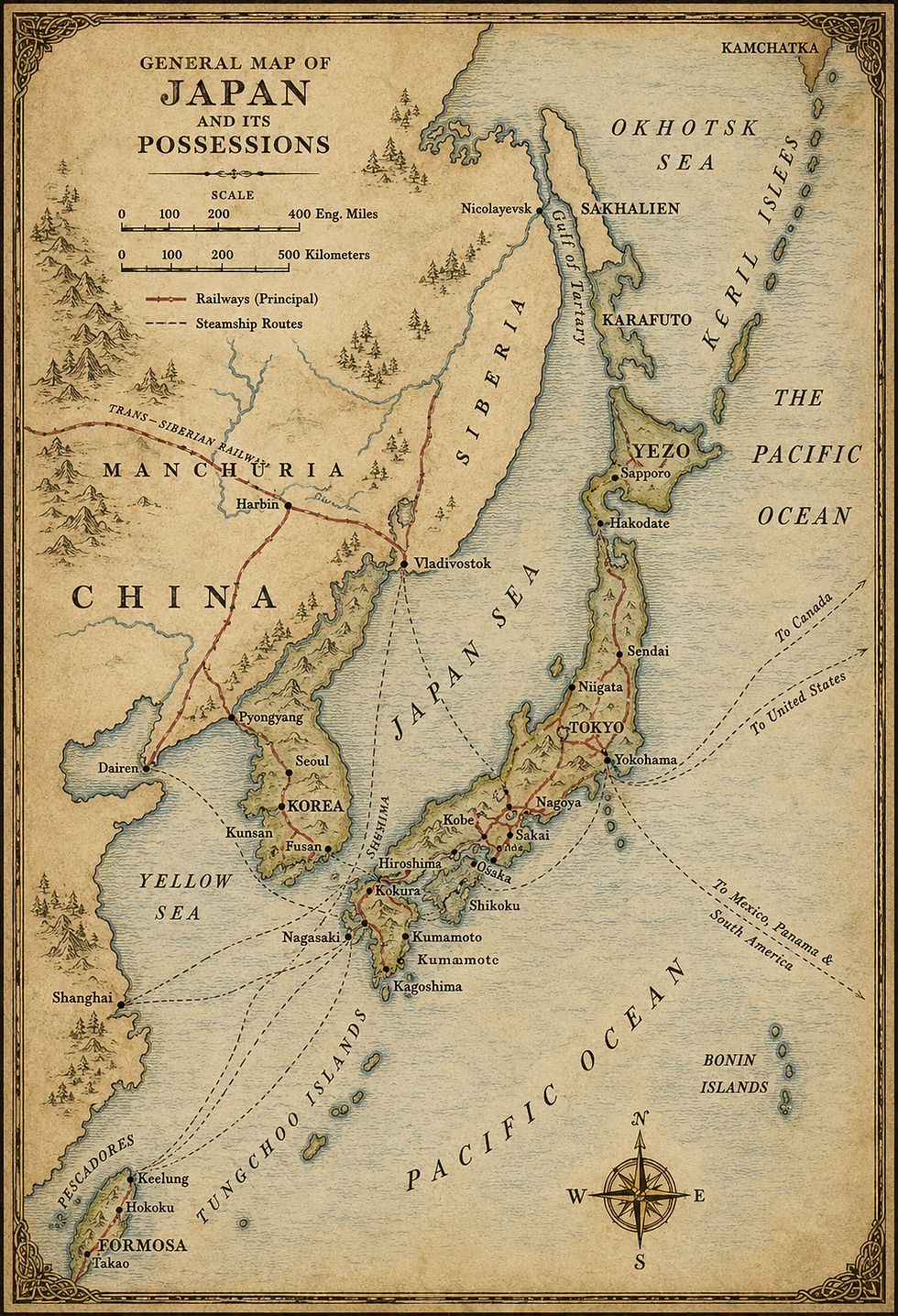
Yet Japanese leaders came to the view that the Western powers still regarded their country as a minor power even though it had become stronger militarily and industrially. This sense of frustration would influence Japanese foreign policy in the decades that followed.
Britain and France Seek Security
After 1918, the main aim of both Britain and France was to avoid another catastrophic war in Europe.
France focused on weakening Germany and building long-term security; Britain aimed to achieve economic stability while also maintaining its global empire and avoiding yet another expensive war on the continent. Neither country thought that the international system set up after World War I would start to fall apart within twenty years.
From 1918 to 1923, the victorious powers tried to establish a peaceful international order by means of diplomacy, treaties, and collective security. However, behind the scenes, economic hardship, political extremism, unresolved territorial disputes, and rival national ambitions kept on increasing. Tensions continued to grow.
The peace established after World War I was real, but it proved fragile.
In the next installment, we turn to Germany and examine how the Weimar Republic’s political struggles, economic crises, and social divisions created the conditions that allowed Adolf Hitler and the Nazi Party to rise from political obscurity to absolute power.
Key Takeaways
World War I brought down four major empires and changed the political landscape of Europe.
The Treaty of Versailles was intended as a measure to avoid another war but caused lasting resentment in Germany.
The League of Nations was an ambitious effort to achieve collective security but lacked the authority and enforcement mechanisms to prevent future aggression.
During the early years after the war, economic instability, political extremism, and unresolved national grievances continued to exist.
The period from 1918 to 1923 set out the political and economic conditions that would influence all the major powers throughout the interwar period.
Coming Next
Part 2: Germany—From Versailles to Hitler (1919–1939)

Comments