

Strategic Brilliance of Alexander's Military Campaigns

Updated: Feb 27

Alexander the Great and the Art of Decisive Warfare
Alexander the Great is one of history’s most studied commanders, not just for his conquests, but for showing how vision, flexibility, and ambition could work together in war. His campaigns were not based on luck or charisma. Instead, they showed careful planning, discipline, and a belief that winning battles mattered only if it led to broader changes.
Looking at Alexander’s campaigns shows he saw war as an ongoing process, not just separate battles. He aimed to break enemy power systems, not just defeat their armies. This approach changed the ancient world’s politics and culture and set ideas that still shape military thinking today.
Foundations of Alexander’s Military System
Alexander got more than just an army from his father, Philip II of Macedon. He inherited a reformed military system focused on professionalism, unity, and teamwork between different types of troops. Philip reorganized the Macedonian phalanx and changed how the army was organized, but Alexander used these tools for bold, strategic moves.
He focused on moving quickly, working together, and taking the initiative. The Macedonian phalanx held the enemy in place with steady pressure, while the companion cavalry struck hard at key moments. This teamwork between holding and attacking forces was central to how Alexander fought battles.
Alexander was also very skilled at reading the land, understanding morale, and choosing the right moment to act. He rarely fought the way his enemies wanted. Instead, he used movement and tricks to set up battles before making his main move.
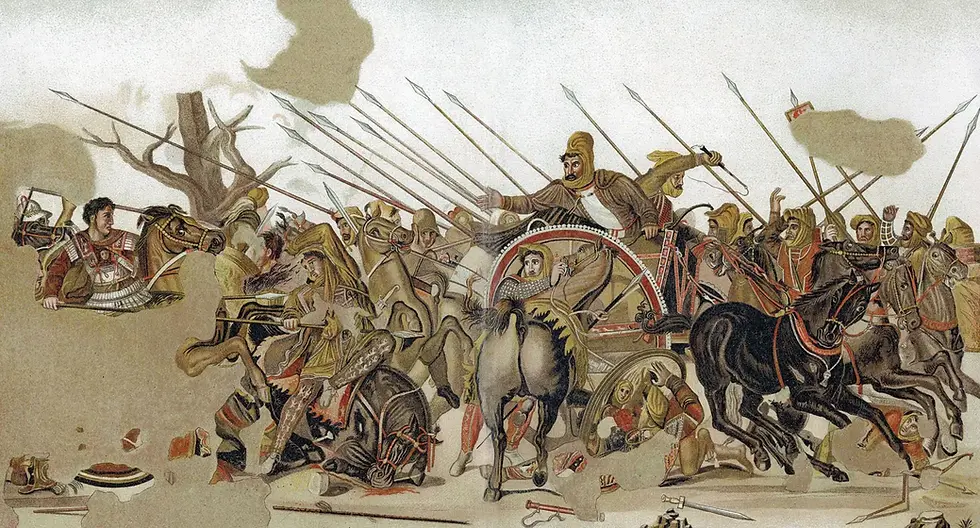
The Battle of Gaugamela in 331 BC shows this strategy in action. Against Darius III’s much larger Persian army, Alexander avoided a head-on fight. He moved at an angle, stretching the Persian lines and making their cavalry shift positions. This opened a gap in the center, and Alexander sent his cavalry straight at Darius. This broke the Persian command and turned a smaller force into a winning one. The battle ended Persian resistance not just because of losses, but because Alexander went after their leaders and control.
Operational Principles Behind Alexander’s Success
Alexander’s campaigns worked because he followed steady strategic principles, not just flashes of genius.
Speed and Initiative
Alexander maintained a relentless operational tempo. Rapid marches across mountains, deserts, and hostile territory prevented enemies from coordinating resistance. He understood that momentum functioned as a weapon.
Integration of Forces
Instead of ruling only by force, Alexander brought local soldiers and leaders into his army. This gave him more troops and helped keep new territories stable.
Psychological Dominance
Alexander built his reputation as carefully as he planned his battles. By leading from the front, he earned his soldiers’ loyalty and made enemies lose confidence. Many cities gave up before a fight even started because they thought resistance was hopeless.
Logistical Discipline
Campaigning far from home meant Alexander had to manage resources carefully. He kept his baggage trains small, used local supplies, and secured coastal routes when he could. Staying mobile was more important than carrying lots of equipment.
All these factors enabled Alexander’s army to adapt to very different environments, from the plains of Anatolia to the mountains of Central Asia and the Indus Valley.
Strategic Results of the Campaigns
Alexander’s conquests had effects that went far beyond just winning battles.
Hellenization and Cultural Exchange
Greek language, education, and art spread across the eastern Mediterranean and Near East. The new cities Alexander founded became centers for government and culture, connecting different regions through trade and ideas.
Political Transformation
Alexander replaced broken-up empires with new governments that mixed Macedonian rule and local traditions. These systems lasted after his death and influenced the Hellenistic kingdoms that came next.
Evolution of Warfare
His campaigns showed how well infantry and cavalry could work together under one command. Later Roman and Hellenistic armies used many of these same ideas.
Economic Integration
New trade routes linked Greece, Egypt, Mesopotamia, and Central Asia. Cities like Alexandria became lasting centers for business and learning.
Alexander’s empire broke apart soon after he died, but the systems he started lasted for centuries.
Lessons for Military Study
Alexander’s campaigns remain valuable not because they can be copied directly, but because they reveal enduring strategic truths.
Adaptability Determines Survival
Alexander changed his tactics based on his enemies’ strengths and the environment, rather than sticking to a single set way of fighting.
Leadership Shapes Combat Effectiveness
Being there at key moments helped build trust and unity between Alexander and his soldiers.
War Targets Systems, Not Armies Alone
By attacking political leaders and morale, Alexander caused his enemies to collapse much faster than they would have if he had worn them down through long battles.
Logistics Enable Strategy
Big plans only work if they are backed by good supply and movement planning.
These lessons recur throughout military history, from the Romans to modern warfare.

The Enduring Significance of Alexander
Alexander’s legacy is not just about conquest, but about change. He showed that real military success comes from matching tactics with political goals and cultural vision. Winning battles was just the start; real influence came from good administration, bringing people together, and keeping up momentum.
His campaigns remind us that winning wars takes preparation, flexibility, and clear goals. Just winning isn’t enough; what matters is turning victory into lasting change. Alexander did both, which is why his campaigns are still a key example for anyone studying war.
Comments