


A.W.41


Albemarle
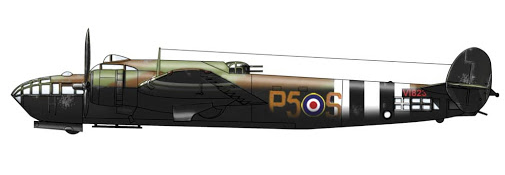

First flight
1940
In service
1940
info
Total in database
Crashed
info
info
Displays
info
Land Leased


Variant | First Flight | Max Speed | Max Range | Max Weght | Max Celling: | Wing Span | length | height |
|---|---|---|---|---|---|---|---|---|
Albemarle Mk I | 01/01/1940 | 265 | 1500 | 31000 | 23000 | 77.8 | 61.4 | 15.5 |
Albemarle Mk II | 01/01/1941 | 265 | 1500 | 31000 | 23000 | 77.8 | 61.4 | 15.5 |
Albemarle Mk III | 01/01/1942 | 265 | 1500 | 31000 | 23000 | 77.8 | 61.4 | 15.5 |
Albemarle Mk V | 01/01/1943 | 265 | 1500 | 31000 | 23000 | 77.8 | 61.4 | 15.5 |
Albemarle Mk IV | 01/01/1943 | 265 | 1500 | 31000 | 23000 | 77.8 | 61.4 | 15.5 |
Albemarle Mk VI | 01/01/1943 | 265 | 1500 | 31000 | 23000 | 77.8 | 61.4 | 15.5 |
Albemarle Mk IX | 01/01/1944 | 265 | 1500 | 31000 | 23000 | 77.8 | 61.4 | 15.5 |
Albemarle Mk VII | 01/01/1944 | 265 | 1500 | 31000 | 23000 | 77.8 | 61.4 | 15.5 |
Albemarle Mk VIII | 01/01/1944 | 265 | 1500 | 31000 | 23000 | 77.8 | 61.4 | 15.5 |

The Armstrong Whitworth Albemarle Mk I was the initial production version of Britain’s much-debated wartime twin-engine aircraft, developed during the late 1930s and early 1940s to serve as a general-purpose medium bomber and reconnaissance platform. In practice, however, the Mk I entered service primarily as a trainer and operational conversion type, bridging the gap between experimental prototypes and the more refined variants that followed. Though conceived as a stopgap design, the Albemarle Mk I reflected the Air Ministry’s urgent need to expand bomber strength while managing shortages in strategic materials and industrial capacity.
Development and Role
The Albemarle project began under Air Ministry Specification B.9/38, which called for a twin-engine medium bomber built with non-strategic materials such as steel tubing and wood, conserving aluminum for higher-priority types like the Wellington and Stirling. The Mk I was the first production version to roll off the line in 1940, incorporating incremental changes from the prototypes but retaining the Albemarle’s unconventional steel-tube fuselage and plywood skinning.
Although originally intended for bombing missions, the Mk I was quickly deemed unsuitable for frontline bombing due to limited range, modest bomb load, and unrefined handling compared to the Wellington or Blenheim. Instead, it found utility in crew training, conversion flights, and secondary duties, helping to prepare squadrons for later Albemarle marks and, eventually, glider-towing and special duties operations.
Powerplant and Enhancements
The Albemarle Mk I was powered by two Bristol Hercules XI radial engines, each producing around 1,590 horsepower. These air-cooled engines gave the aircraft dependable performance for training flights, though not the speed or ceiling required for advanced combat roles.
Enhancements in the Mk I included:
Standardization of the crew layout, easing the transition from prototype to production
Installation of initial bomb racks and bomb-bay equipment, though rarely employed operationally
Early fitment of reconnaissance equipment in some airframes
Retention of defensive armament, including a powered dorsal turret and nose gun positions, providing realistic training conditions for crews
These features ensured that the Mk I could function as a representative platform for bomber instruction, even if it lacked frontline capability.
Armament and Equipment
The Albemarle Mk I carried a defensive suite typical of its era, including:
A Boulton Paul dorsal turret armed with twin 0.303 in Browning machine guns
A nose position for a single 0.303 in Vickers K gun
Ventral and beam positions fitted in some examples, though often omitted in training aircraft
Bomb capacity was modest, up to 7,500 pounds on paper, though in practice Mk Is seldom carried full loads during operational use. Equipment installations included basic navigation gear, intercom systems, and early bombing sights, all intended to provide trainees with realistic operational experience.
Operational Context
The Albemarle Mk I entered squadron service in 1941, but its limitations quickly relegated it to training units and conversion flights. Crews assigned to the Mk I learned twin-engine handling, gunnery coordination, and bomb-aiming procedures in a setting that mirrored combat aircraft without consuming higher-value front-line types.
While never used extensively in combat, the Mk I served an important transitional role, giving both Armstrong Whitworth and the Royal Air Force time to refine the design into later marks that would specialize in glider towing, paratroop drops, and special operations.
Crew Experience
Aircrews generally regarded the Mk I as serviceable but uninspiring. Pilots found the aircraft sturdy, with the Hercules engines providing adequate power, but complained of sluggish handling and limited performance. Navigators and bombardiers benefited from functional but rudimentary equipment, while gunners gained practice in powered turret operations under relatively safe conditions. For many crews, the Mk I represented a stepping-stone aircraft—a way to build hours and train before moving on to more capable platforms.
Conclusion
The Albemarle Mk I never fulfilled its original role as a frontline medium bomber, but it played a crucial part in the early wartime period as a trainer and conversion aircraft. By absorbing training duties and giving squadrons valuable experience, the Mk I freed more capable bombers for combat operations. Although overshadowed by its successors and remembered as one of the less glamorous British wartime designs, the Albemarle Mk I marked the beginning of an aircraft family that would later serve with distinction in airborne and special duties operations.
d478ebfd-5806-492a-8cc9-5b4df862ae63
41,427